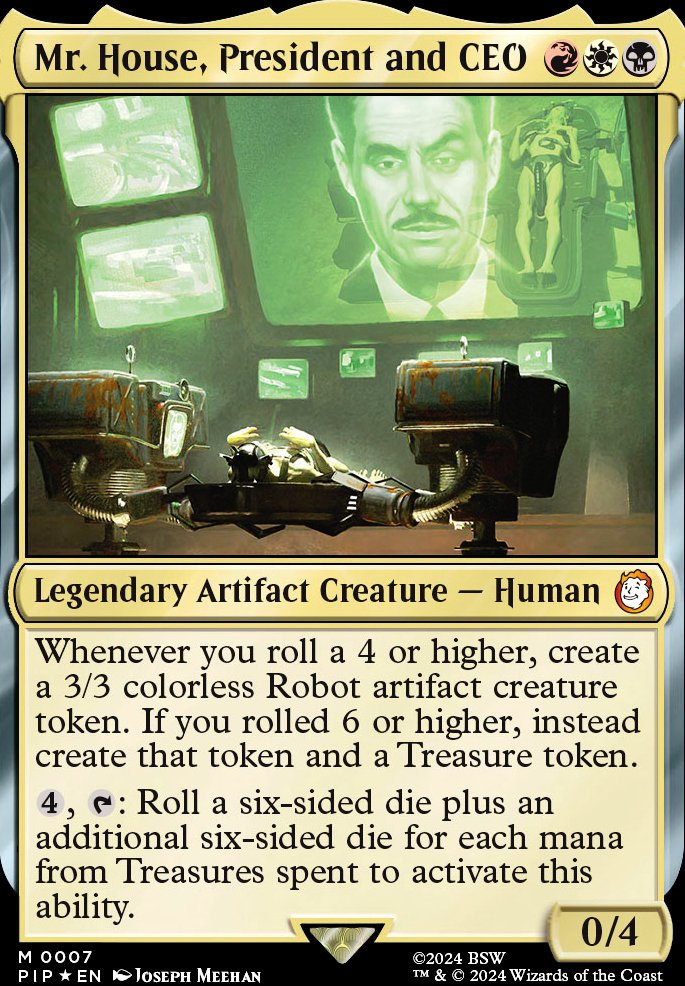
It's a familiar scene in the world of Commander: you've lovingly crafted a deck around a specific strategy, a chosen legendary creature guiding every decision. But what if you threw all that out the window? What if, instead of meticulously selecting your general, you embraced the unknown and played with a random commander? This isn't just a niche challenge; it's a rapidly growing phenomenon that injects unparalleled replayability and strategic depth into every game. Mastering gameplay strategies with a random commander means cultivating adaptability, quick thinking, and a profound understanding of Magic's core mechanics, turning every match into a unique puzzle to solve.
Forget rote plays and predictable combos. When your commander is a surprise, your strategic muscles get a workout unlike any other. You're forced to assess a new game plan on the fly, leveraging unexpected synergies and navigating unfamiliar territory. It's a testament to the versatility of Magic: The Gathering itself, proving that true mastery comes not just from knowing your own deck inside and out, but from being able to pivot and thrive no matter what curveball the game throws.
At a glance
- Embrace Flexibility: Your primary strategy isn't fixed; it adapts to your random commander.
- Build a 'Good Stuff' Core: Ensure your deck can function effectively even without specific commander synergy.
- Prioritize Mana Fixing & Card Draw: These are crucial for accommodating diverse color identities and strategies.
- Understand Core Archetypes: Identify if your random commander leans aggro, control, combo, or value, and adjust.
- Look for Hidden Synergies: Your random commander might interact unexpectedly with cards already in your 99.
- Don't Overcommit: Be ready to pivot if your initial plan with the commander isn't working out.
- Focus on Fundamentals: Strong threat assessment, resource management, and interaction are paramount.
The Allure of the Unknown: Why Play Random Commander?
The concept of "Randommander," as it's affectionately called in some communities, isn't new, but its popularity is surging. Imagine arriving at game night, shuffling your deck, and then—instead of pulling your favorite legendary—you roll some dice, consult a randomizer, or visit a tool like Our random commander generator to determine your general. Suddenly, a game that might have been routine becomes an uncharted adventure.
This isn't just about novelty; it’s a profound shift in how you experience Commander. The Reddit community, for instance, often discusses how this twist fosters creative theory-crafting and brings playgroups closer, as players collectively figure out how to make the most out of bizarre pairings. It forces you to look at cards differently, finding unexpected utility in your 99, and pushing the boundaries of what a "good" Commander deck can be. As one Redditor noted, "It's been a fun way to theory-craft and come together as a play group." It highlights the innate randomness present in card games and asks players to lean into it rather than resist it.
The primary draw is replayability. Even with the same 99 cards, a different commander transforms the entire strategic landscape. You might suddenly find yourself playing a Voltron strategy with a legendary that was previously just a minor value engine, or a control game with a commander you thought was purely aggressive. This constant reinvention keeps the game fresh, challenging your preconceptions and deepening your understanding of Magic's intricate design.
Before the Chaos: Strategic Deck Building for the Unpredictable
While the commander might be random, your deck doesn't have to be. In fact, smart deck construction is the cornerstone of success in this format. You're essentially building a highly adaptable vehicle that can be driven by any number of captains.
The "Good Stuff" Philosophy
Forget hyper-synergistic combos that rely entirely on your commander being on the battlefield. When playing with a random commander, your 99 needs to function as a cohesive unit even without a specific general dictating the game plan. Think of it as a "good stuff" philosophy, but with a nuanced understanding of flexibility.
Your deck should prioritize:
- Robust Mana Base: This is non-negotiable. With potentially shifting color identities, you need excellent mana fixing. Lands that tap for any color (e.g., Command Tower, City of Brass, Mana Confluence), fetch lands, shock lands, tri-lands, and robust ramp spells that produce any color (e.g., Chromatic Lantern, Sol Ring, Arcane Signet) are paramount.
- Versatile Interaction: Your removal, counterspells, and disruption need to be broadly applicable. Path to Exile, Swords to Plowshares, Cyclonic Rift, Assassin's Trophy, and Counterspell are valuable because they address a wide range of threats regardless of your commander's specific needs.
- Efficient Card Draw: Running out of gas is a death sentence. Include plenty of generic card advantage engines like Rhystic Study, Mystic Remora, Phyrexian Arena, Harmonize, or even simple cantrips. Your commander won't always provide card advantage, so your 99 must.
- Flexible Threats: Creatures and spells that are good on their own merit, regardless of tribal tags or specific synergies. Think powerful mid-range threats like Grave Titan, Sun Titan, Inferno Titan, or utility creatures like Reclamation Sage.
- Modal Spells: Spells with multiple choices (e.g., Cryptic Command, Charm cycles) offer incredible flexibility to adapt to various situations your random commander might present.
Embracing the Color Identity Shift
The most significant challenge with a random commander is often the color identity. Your deck's color identity is determined by your chosen random commander. This means your 99 must contain only cards that fall within that commander's color identity. This can be restrictive if you randomly draw a mono-color commander for a typically five-color deck.
The practical solution is to build a "colorless core" and then add flexible colored staples. Many players opt for a 5-color base deck, allowing them to legally play any random commander. However, this means you need to be mindful of basic land types if your commander suddenly restricts you to, say, only Forests and Islands. Cards that fetch basic land types or fix colors without relying on specific basic types become even more valuable.
Pro-Tip: Consider including lands that are basic land types but produce other colors, like the Ravnica shock lands (e.g., Steam Vents is an Island Mountain). These can be fetched by basic land tutors if your commander allows.
In the Thick of It: Gameplay Strategies Once Your Commander is Revealed
The moment your random commander is revealed is when the real strategic dance begins. You have a few moments to process, assess, and formulate an initial game plan.
The Initial Assessment: Who Am I Now?
- Color Identity Check: What colors does your commander have? This immediately tells you which cards in your 99 are legal to cast. (This is why a robust 5-color mana base is crucial).
- Abilities & Keywords: Read your commander's text box thoroughly. Does it have built-in card advantage? Protection? Evasion? Removal? A combat ability? A combo piece? Does it synergize with a particular type of card you might have?
- Mana Cost: How expensive is your commander? This dictates how early you can reliably cast it and how much mana it will tax you if it gets removed.
- Power & Toughness: Is it a credible threat on its own (Voltron potential)? Or is it fragile and needs protection?
Crafting an Adaptable Game Plan
Once you've assessed your commander, you need to quickly formulate a strategy, understanding that it's a living document that will evolve throughout the game.
- Early Game (Turns 1-4): Ramp & Evaluation:
- Prioritize mana ramp that helps you cast your commander and potentially fix your colors.
- Evaluate your opening hand in the context of your commander. Are there any immediate synergies? Is there a clear path to generating value or threats?
- Don't be afraid to cast your commander early if it provides immediate value (e.g., card draw, token generation).
- Be mindful of what your opponents are playing. Your random commander might counter one player's strategy particularly well, or be vulnerable to another's.
- Mid Game (Turns 5-8): Pivoting & Leveraging:
- This is where your adaptability truly shines. Has your initial plan worked? Is your commander sticking to the board?
- Look for unexpected synergies. Maybe your random commander is a creature type you have some support for, or has an ability that makes a seemingly innocuous card in your hand incredibly powerful. For example, a random commander with a blink effect can turn all your "enters the battlefield" creatures into value engines.
- Focus on generating consistent value. Can your commander protect your board? Draw cards? Create resources? Use its abilities to grind out advantage.
- Don't be afraid to change strategies. If your random commander gets repeatedly answered, shift focus to your 99 to apply pressure or build a different win condition. Some commanders are meant to be cast and let their effect linger, others are better kept in the command zone until the right moment.
- Late Game (Turns 9+): The Unexpected Win:
- Random commanders often lead to unique win conditions. You might not have the dedicated combo you usually would, so look for ways to leverage your commander's final form.
- Can your commander go for a lethal attack? Does its ability create an overwhelming board state? Can it enable a two-card combo with something already in your 99?
- Sometimes, the random commander is merely a distraction, and your 99 does the heavy lifting. Use your commander to draw attention while you assemble your true plan.
Commander Archetypes, Randomly Assigned
While your commander is random, most legendary creatures still fall into recognizable archetypes. Being able to quickly identify where your random commander sits helps you mold your strategy.
- The Aggro/Voltron Commander: If your random commander is cheap, evasive, or has combat-oriented abilities (e.g., double strike, lifelink, protection), consider gearing your game towards attacking. Look for equipment, auras, and pump spells in your 99 to make them a formidable threat.
- The Combo Enabler: Does your commander have an ability that generates infinite mana, creatures, or card draw with a specific, often generic, card type? (e.g., "untap target permanent," "create a token," "sacrifice another creature"). Scan your deck for potential partners.
- The Control/Stax Commander: If your commander taxes opponents, restricts their plays, or offers consistent removal, lean into a control strategy. Focus on protecting your commander and disrupting opponents while you build up resources.
- The Value/Grind Commander: Many commanders simply generate continuous, incremental advantage (e.g., draw a card, create a token, recur a permanent). These generals excel at out-resourcing opponents over time. Focus on protecting them and letting their abilities slowly win you the game.
- The "Permissionless" Commander: Some commanders have abilities that don't depend on their color identity or specific creature types, but rather on generic game actions (e.g., "whenever a creature dies," "whenever you cast an instant or sorcery"). These are often the easiest to integrate into a random commander deck, as they provide value regardless of your colors or specific synergies. Orvar, the All-Form, for example, is often cited as a commander that makes every game feel random and different, even in a dedicated deck, due to its ability to copy almost anything, often including opponents' permanents. This highlights the power of broadly applicable abilities.
Common Pitfalls and How to Avoid Them
Even seasoned players can stumble when navigating the random commander landscape.
- Overcommitting to a Non-Existent Synergy: You might have a powerful tribal package, but if your random commander isn't that tribe, forcing it will only weaken your board. Let your commander dictate your current priorities, not the other way around.
- Ignoring Your Commander: Just because it's random doesn't mean it's irrelevant. Your commander is still a free card in your command zone that you can cast multiple times. Even a seemingly weak commander can draw removal, making it a valuable decoy. Always look for ways to extract value.
- Lack of Interaction: This is a trap in any Commander game, but especially with random commanders. You can't rely on your commander to always answer threats. Your 99 must be able to remove problematic permanents, counter spells, and disrupt opponents effectively.
- Poor Mana Base: As mentioned, this is critical. A mana base that can't reliably produce the colors for your random commander will leave you unable to cast crucial spells. Don't skimp on the fixing.
- Forgetting Commander Tax: It's easy to lose track of how expensive your commander becomes. Always factor in the commander tax when planning your turns and mana allocation.
Building a Truly 'Random Commander Ready' Deck
Moving beyond the "good stuff" philosophy, let's look at the specifics of crafting a deck that thrives under any random general.
The Foundation: Ramp, Draw, Interaction
Your deck needs a robust core of these three elements that can function in any color identity (or be flexible enough to be cast).
- Ramp: Sol Ring, Arcane Signet, Fellwar Stone, Thought Vessel, Chromatic Lantern, Coalition Relic, Worn Powerstone, Explosive Vegetation, Farseek (if you include enough basic land types).
- Card Draw: Rhystic Study, Mystic Remora, Beast Whisperer, Guardian Project, Reconnaissance Mission, Night's Whisper, Harmonize, Generous Gift (doubles as removal).
- Interaction: Swords to Plowshares, Path to Exile, Assassin's Trophy, Cyclonic Rift, Negate, Counterspell, Generous Gift, Chaos Warp, Beast Within.
Flexible Threats and Answers
Include creatures and spells that are generically powerful or offer modular utility:
- Utility Creatures: Reclamation Sage, Knight of Autumn, Eternal Witness, Solemn Simulacrum, Avenger of Zendikar, Grave Titan, Sun Titan. These creatures are great regardless of specific commander synergy.
- Board Wipes: Wrath of God, Damnation, Blasphemous Act, Farewell, Austere Command. Crucial for resetting the board when you're behind.
- Recursion: Eternal Witness, Reanimate, Animate Dead, Sun Titan. Bringing back key pieces or even your commander from the graveyard is invaluable.
- Protection: Swiftfoot Boots, Lightning Greaves, Darksteel Plate. Protecting your random commander ensures you get more value out of it.
Mana Fixing: Beyond the Basics
To truly be "Random Commander Ready," your mana base must handle the wildest color shifts.
- Fetch Lands & Shock Lands: These allow you to fetch any combination of two colors (e.g., Flooded Strand can get Hallowed Fountain or Steam Vents).
- Tri-Lands: Zagoth Triome, Ketria Triome, etc., offer three colors and can be fetched.
- Rainbow Lands: Command Tower, City of Brass, Mana Confluence, Exotic Orchard, Prismatic Vista, Fabled Passage. These are essential.
- Artifact Mana: Sol Ring, Arcane Signet, Chromatic Lantern, Fellwar Stone, Coalition Relic. These are universally helpful.
A note on building a '5-color' deck for random commanders:
While building a 5-color deck ensures you always have the right lands for your random commander's color identity, it also means your deck might be a bit less focused than a dedicated 3-color deck. The trade-off is significant: immense flexibility versus raw power. Many players opt for a 4-color base that excludes one color, then lean into that for the "good stuff" cards while ensuring strong mana fixing for any potential random commander. This can be a sweet spot.
Addressing Common Questions and Misconceptions
"My random commander is terrible! What do I do?"
Even a "terrible" commander can serve a purpose. It might be a cheap, disposable blocker, a target for opponent's removal that saves your better creatures, or simply a card in the command zone that you rarely cast. Focus on winning with your 99. The random commander challenge is about adapting, not always about making your commander the star. Sometimes, the best strategy is to simply ignore it.
"How do I build a deck that doesn't just feel like a pile of 'good stuff'?"
The "good stuff" base is essential, but you can still weave in micro-synergies. Include cards that are generally good but have hidden upside with common commander abilities. For example, creatures with "enters the battlefield" effects are good on their own, but become amazing if you randomly get a commander with a blink ability. Tokens are generally useful, but a commander that cares about creature sacrifice or +1/+1 counters makes them even better. Think in broad strokes of synergy, not hyper-focused combos.
"What if my random commander makes some of my cards illegal?"
This is a key rule of Commander: your deck must adhere to your commander's color identity. If your chosen random commander is, say, mono-red, you cannot legally cast any white, blue, black, or green spells in your deck. This is why a strong, multi-color mana base is crucial, and why many opt for decks built primarily around artifacts, colorless spells, and lands that tap for any color. The flexibility of your 99's mana costs is just as important as the lands that cast them.
"Does this format slow down games?"
Initially, yes. Players need a moment to read their random commander and adjust. However, experienced random commander players develop a rapid assessment process. The variance can also speed up games if a player draws a commander that perfectly aligns with a fast combo, or slow them down if everyone is grinding for value. Overall, the challenge isn't necessarily about speed, but about the strategic depth it adds.
Advanced Tactics for the Random Commander Veteran
For those who have embraced the chaos and want to push their Random Commander games further, consider these refined approaches:
- Metagaming the Chaos: If your playgroup frequently uses a random commander generator that pulls from a specific pool (e.g., all legendary creatures, only specific sets), you can subtly adjust your 99 to have general answers or synergistic pieces that might align with common archetypes within that pool.
- Leveraging Group Dynamics: Random commanders can sometimes be "kingmakers." You might get a commander that inadvertently helps one player more than another. Be aware of these dynamics and use your commander's abilities diplomatically, or aggressively, to shape the game state.
- The "Commander as Removal Bait" Strategy: Sometimes, your random commander has a high casting cost or a menacing ability that draws immediate attention. Use it. Cast your commander to bait out an opponent's Path to Exile or Swiftfoot Boots, saving your more crucial threats for later. This is a form of resource trading.
- Creating Your Own Random Commander Pool: Instead of a vast online database, curate a list of "fun" random commanders your group agrees on. This can ensure a certain power level or specific types of interactions, making the games more consistent in their chaos. This is a common practice, as hinted at in the Reddit discussions, allowing players to tailor the "random" experience.
Embracing the Journey: Beyond Winning
Ultimately, playing with a random commander isn't always about optimizing for the win. It’s about the journey, the discovery, and the sheer joy of improvising. It's about seeing your collection through fresh eyes, finding surprising interactions, and laughing off the times you get a truly terrible pairing.
This format pushes you to be a better Magic player by forcing you to:
- Understand fundamental mechanics: Without specific synergies to fall back on, you rely on core concepts of tempo, card advantage, and threat assessment.
- Broaden your card knowledge: You start to see every card in your deck as a potential piece of a new puzzle, not just part of a pre-determined machine.
- Improve your adaptability: The ability to pivot your game plan on the fly is a skill that translates to all formats of Magic.
- Foster creativity: You'll discover novel ways to win and interact that you never would have considered with a fixed commander.
So, the next time game night rolls around, consider throwing caution to the wind. Build a versatile deck, grab your favorite randomizer, and prepare for an unpredictable, endlessly rewarding experience. You might just find that the best commander is the one you didn't choose.